


“Top Five Things to Learn from the Greggs vs Google Twitter Debacle” plus 1 more |  |
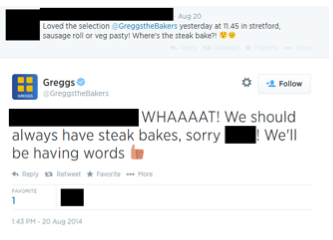
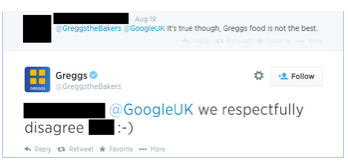
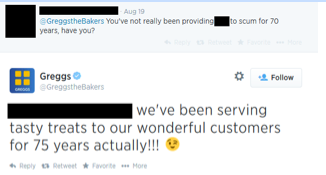
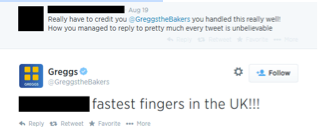
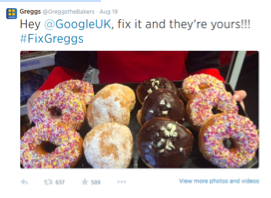
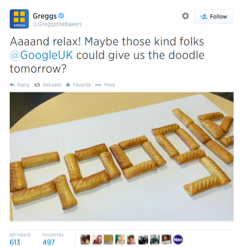
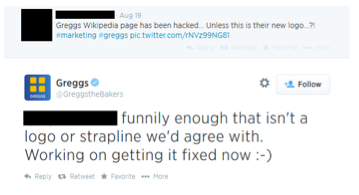
| Top Five Things to Learn from the Greggs vs Google Twitter Debacle Posted: 16 Oct 2014 09:47 AM PDT This is a guest contribution from Mark Potter. Greggs is the UK's largest bakery chain, famed for its sausage rolls and steak bakes. They have always enjoyed a strong social media presence, winning a Digital Impact Award in 2013 for a 'Sandwich Maker' Facebook app. As a relatively low-budget food chain, they are a popular target for online abuse. As a result, they have already developed a robust strategy for dealing with complaints and controversy: Things turned particularly sour in August, when the Google algorithm accidentally replaced the official Greggs logo with a highly offensive fake version. The gaffe spread like wildfire across the internet, and the Greggs Twitter account was rapidly inundated with tweets. However, the social media team kept their cool, and handled the crisis with aplomb. Almost 300 tweets and a new hashtag later, the correct logo was restored – and Greggs had emerged as a Twitter champion. Here are some tips on handling a crisis on Twitter, as demonstrated by the social media team at Greggs: Rise Above ItThe whole internet is teeming with trolls, but Twitter is a particularly virile breeding ground. Although many people sympathised with the situation, Greggs was also subjected to a fair amount of abuse. When Twitter catastrophe strikes, never stray from the Golden Rule – DON'T FEED THE TROLLS. Hitting back with an angry retort can only ever backfire, making a bad situation worse. Make like Greggs by responding in a polite, classy manner – or simply don't reply at all. Crack a JokeTwitter partly revolves around competitive comedy – the accounts with the funniest tweets often have more followers. Therefore, humour can be one of the best ways to divert a Twitter crisis. However, before making light of a disaster, you should always use discretion. In some situations, comedy is inappropriate – as many brands soon discovered during Hurricane Sandy. Hire an ExpertTwitter disasters are occasionally brought about by the company itself – as with McDonald's ill-conceived #McDStories. However, as Greggs discovered, crises can also be caused by external forces. These unpredictable situations are perhaps the most dangerous, as many companies don't have the resources in place to deal with them. If social media forms a large part of your marketing plan, you should hire a professional social media consultant to manage your online image. As many people noted during the Greggs debacle, they're worth their weight in gold when disaster strikes. A Picture is Worth a Thousand WordsEllen's infamous Oscars selfie is currently the most retweeted message in the history of Twitter. This highlights the importance of imagery on social media. Pictures are far more likely to be shared by followers, and are therefore invaluable to social media marketing campaigns. As Greggs demonstrated, pictures can also prove helpful during a disaster. This simple shot cost next to nothing, yet received an incredible 83 retweets and 589 favourites – making it one of the most successful tweets Greggs has ever posted. A follow-up tweet, posted when the correct logo had been restored, garnered a similar number of favourites and retweets: Monitor for MentionsIt goes without saying that you should reply to direct questions and comments on Twitter. Throughout the crisis, the official Greggs account was inundated with questions and comments – and each one was met with an appropriate response. However, not every tweet about the situation was directed at Greggs. The social media team was forced to go a step further, proactively 'butting in' to other people's conversations about the debacle. If you have an online presence, sign up for a monitoring service such as Google Analytics or Topsy. These automatically scour the web for brand mentions, notifying you when people are discussing your company online. If you see a comment – whether defamatory or positive – about your business, you will be poised to reply and set the record straight. No two Twitter debacles are the same. However, by studying the reactions of different companies to their own crises, you will be able to respond effectively when disaster comes knocking at your own door. This article was written by Mark Potter of Namecheap.com, a leading ICANN accredited domain registrar and web host. Originally at: Blog Tips at ProBlogger     |
| How Blogging In College Got Me My First Job Posted: 15 Oct 2014 05:07 PM PDT This is a guest contribution from PR specialist Caitlin Dodds. I remember sitting alone in the airport with three hours to kill before my flight to Madrid. Squirming on the hard plastic chairs at my boarding gate with my laptop perched on my knees, I typed my first post on my new study abroad blog. You know the saying, "the rest is history"? Well, that cold January day is a big part of where I am today because my little study abroad blog helped determine my career and land my first job. Here's how I did it. Getting Started with my Travel BlogAll my friends that had spent time in Europe kept blogs that were updated every few weeks with a snapshot of their crazy jet-setter lifestyle. But as their semesters progressed, updates got shorter and less frequent. I loved writing, and I jumped at the chance to blog about something exciting. I set up my WordPress blog, customized the layout, learned how to use widgets, set up category pages and everything else that mattered. I obsessed over themes, the tagline for the blog, and the 'about me' page. I didn't know how much time I would have to write but week after week while my friends' updates became few and far between, I stayed up late writing detailed recaps of life in Spain, the trips I took, the people I met, the food I ate, etc. I was obsessed with editing, picking the perfect pictures, writing, rewriting, and editing posts to perfection. When I discovered WordPress built-in analytics, "stats," I was hooked. I loved seeing where my readers were coming from (all over the world!) and what brought them to my blog. All these things got me thinking – I was studying for a marketing degree, but hadn't figured out what to do yet. I had friends that worked in web development and SEO and I was sort of interested in Internet marketing. I loved managing my blog, so why shouldn't I try to blog (or at least write) full time? Turning My Blog Into a Resume PieceWhen I returned to Grove City College for my senior year, my Content Marketing professor encouraged me to use my blog for the final project. He had me expand the blog and turn it into a travel resource for students trying to study abroad on the cheap. He challenged me to find ways to monetize what I loved and apply SEO strategies to it. In the Spring I was taking a class in SEO and job searching for digital marketing jobs that would allow me to write for a living. Through a friend of a friend, I found a position in Lancaster, Pennsylvania at Web Talent Marketing, a digital marketing agency. I applied for the position and to prove my experience – I sent the hiring manager a link to my blog with a short snapshot of it's stats, growth, and success. Within hours I had a voicemail asking me for a phone interview. When I went to visit the company and interview, I was able to use my blog for specific examples of things I had done, the knowledge I had of content marketing, and my writing ability. I was able to talk about the type of promotion I did for it, how I tweaked blog posts to perform better, and how I used analytics to determine the content my audience liked best. I had a job offer within three days. If you're blogging full-time, or maybe just part-time, and in the market for another job, don't underestimate how you can leverage your blogging experience to land that job! Here's how my personal blog made me more marketable:1. It helped me stand out in a competitive job market of college grads because I could market it as "real life experience." I've used my blogging experience to help my clients maintain better blogs and succeed in content marketing. I even became one of the first members of our PR team and have helped grow Web Talent's SEO blog by being a top contributor every month. I'm not blogging for myself on a regular basis anymore, and I'm nowhere near monetizing my efforts. Still, I know that having that blog during my time in Spain is the reason I have my job and career, and who knows? Maybe someday I’ll have the opportunity to monetize my personal blog. Caitlin Dodds is an Online PR Specialist for Web Talent Marketing with a focus on content marketing and social media. She enjoys blogging in her spare time and tweeting at @caitlinjdodds.
Originally at: Blog Tips at ProBlogger     |


| You are subscribed to email updates from @ProBlogger To stop receiving these emails, you may unsubscribe now. | Email delivery powered by Google |
| Google Inc., 20 West Kinzie, Chicago IL USA 60610 | |

