This is a guest contribution from Sabina Stoiciu, blogger, photographer and traveller.
While it can be quite redundant to pose this question, here it goes: Why blog? Let's have a look at a few key stats that'll convince you to set up a blog in the next two seconds, if you haven't already got one:
- 77% of Internet users read blogs
- nearly one quarter (23%) of the time spent on the Internet is directed towards blogs and social networks
- small businesses that run blogs increase their leads number by 126%
- offering valuable content is one of three reasons why people follow your brand on social networks
- 81% of US customers give credit to recommendations coming from blogs they're fond of
(see the full stats on socialmediatoday)
One thing that happens to many fresh bloggers is not knowing what to write about or what would best benefit their audience, in order to convince them to subscribe to that blog and to make them desperately wait for another post to be published.
Supposing this little problem of not knowing exactly what to blog about might occur to anyone, not only to blogging rookies, it's a good idea to think about what people want from your blog.
By not knowing this, you make yourself a disservice because:
a) you can fail at attracting new readers if you're not aware of what they seek and
b) you might lose some of your current readers if you don't meet or keep up with their expectations.
When talking about blogs, it's important to know how readers see them. Some people read blogs to live other people's experiences. Others look for tips they can apply to themselves. Several people look for business information, while there are many others who seek entertainment material. As Darren wrote, a good question is also what your content is centred upon – information, inspiration or interaction.
Generally people find a blog, like it and become a reader because they value the content and the way in which it's written, but wouldn't it be great to actually know what your visitors want and to use this knowledge to attract them towards your blog for converting them into full-time readers?
Below you will find 5 ways that can help you in the quest of finding out what people really want from your blog.
1. Listen to them
You can do so by offering them a way to express their content related desires and by actually reading what they tell you.
Two places where readers can share what they would like to find are the comments section of every blog post and the "contact me" form you can embed into your blog. A form like this provides people a short and easy way to get in touch with you and to keep discussions private, in comparison to the comments section. 123ContactForm is an online form and survey builder that could help you in several ways. For example, it offers a free plugin for WordPress based blogs that can help you create a customisable contact form with almost no effort – you can access one here.
2. Ask them
You can also run a survey in which you kindly encourage them to tell you what they would most love to see on your blog.
The benefit of a survey is that it can help you in two ways: with your current readers and with potential readers. Why is that? Because you can publish it on your blog, where you're addressing it to your current readers, but you can also publish it on other websites, partner blogs or social media channels, where you can reach a whole bunch of other people that aren't necessarily your readers yet.
A free survey tool like the one from the already mentioned 123ContactForm can help you publish your survey on any of the above channels and personalise it as you wish, if you want people to recognise your brand.
While point 1 and 2 refer to the "ask the readers what they want" part, points 3 to 5 handle the more technical aspect of the user vs. content research, that is letting the data speak about what topics you should cover.
3. Keyword research
Get to know what is trending by doing some keyword research on Google, as well as on your blog. Both types of search can help you.
Here's how: if you find out what people are looking for right now, you can start covering those topics (supposing you haven't already) and drive organic traffic to your blog. On the other hand, knowing what people have been looking for on your blog can point you towards popular topics which you can afterwards choose to cover more in-depth.
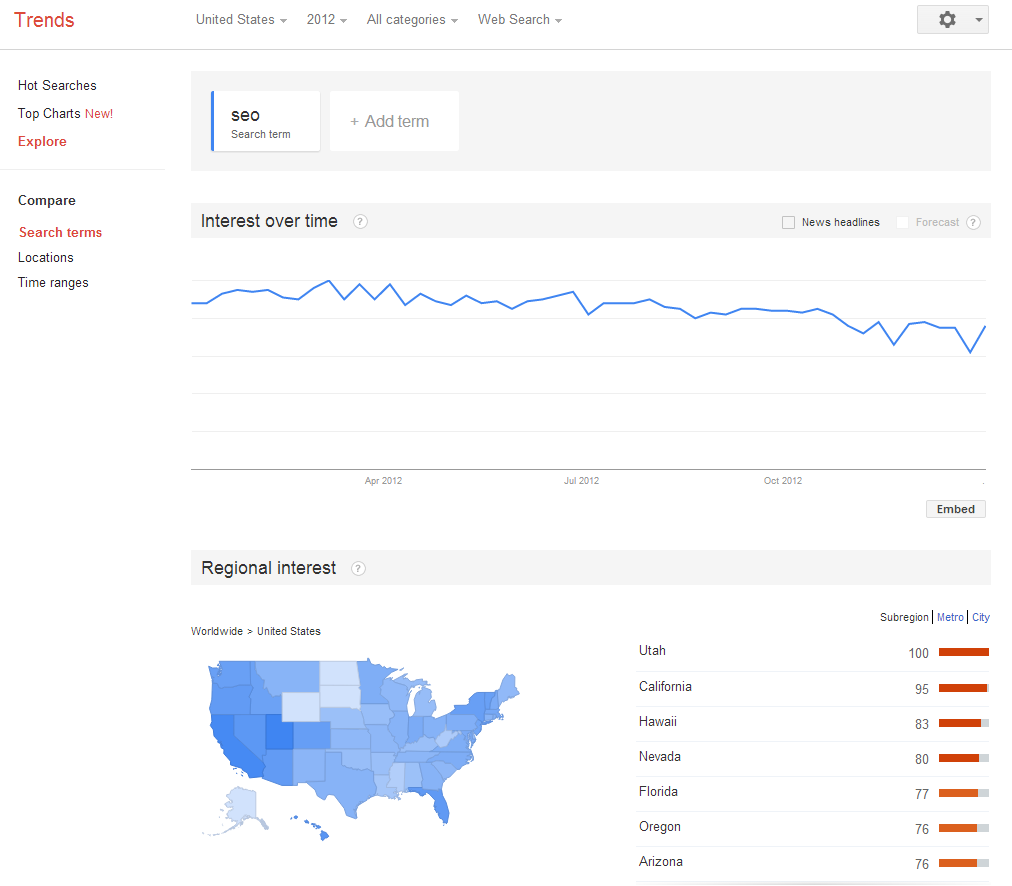
As of the free tools that can help you do the research, you may want to try out Google Trends, the already popular Google Analytics and your blog's stats. Again, this tool works for current and future visitors.

4. Check post traffic
Another indicator of what drives your visitor's interest is the post traffic. Articles that readers find relevant and valuable will show an increased traffic volume compared to ones that are not so appealing.Thus, keeping an eye on your blog's traffic data from Google Analytics or the blog stats is always a good idea that might also define or at least improve your content strategy.
One thing to bare in mind when talking about post traffic is also how well you optimise your posts for search engines. By using relevant and targeted keywords, clearly expressing your ideas, using a friendly, yet catchy headline, setting helpful tags and image descriptions, you allow visitors to find more easily what they're looking for. And Google will love you for that.
You can also check out Darren's post on how to optimise a blog post that performed well in terms of traffic.
5. Analyse engagement
The last point on our list (but definitely not one that should be neglected) is to analyse the engagement around your blog posts and around their reverberance in social media.
To be more specific, take a look at the number of likes, shares and comments a post received directly on your blog, as well as on the social media channels where you shared it. Naturally, posts that sum up a lot of engagement have always proved themselves to be a hot topic for those engaging with them. Hence, why not consider exploring more of these topics that your readers were so keen on?
These are some ideas on how to find out what your blog visitors are looking for. Remember, you can always test to see what works out best and let the results point you towards the direction worth following.
Sabina Stoiciu enjoys blogging, photography, traveling and finding ways of gathering and sharing relevant business knowledge. You can follow her on Twitter. She also writes for 123ContactForm, the online form and survey builder – try it for free.
Originally at: Blog Tips at ProBlogger
![Build a Better Blog in 31 Days]()
5 Ways to Find Out What People Really Want From Your Blog