


ProBlogger: Gmail Trying to ‘Fix’ Our Inbox and What it Means for You. |  |
| Gmail Trying to ‘Fix’ Our Inbox and What it Means for You. Posted: 29 Jul 2013 08:34 AM PDT If capturing and sending email is a part of your blog, it might be your newsletter, affiliate programs, sales email or even just reader comment notifications there are some changes (that have been looming for some time) now ramping up to a level that will impact the way you create and send emails … Email services providers are taking matters into their own hands to fix our inbox’s.… and when Google start leading the charge with this, we all better pay attention. The reality is that when it comes to our own inbox it’s a never ending stream of important stuff mixed with the boring but essential stuff, mixed in with the junk mail and spam. Sorting and organising takes time and if your not on top of it, the important emails get lost in the noise. It’s a problem we’ve been trying to solve since the dawn of email:
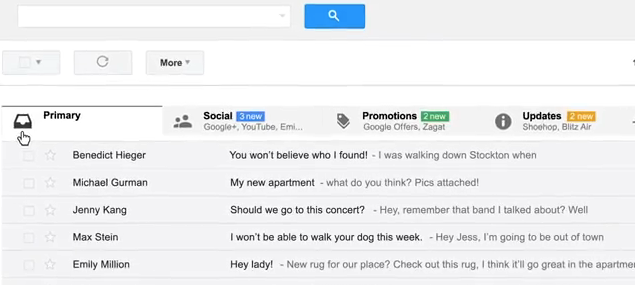
All of these things were created for users to help themselves — of course if they wanted. I realised this was all about to change when providers started to play with the idea of proactively helping us manage the legitimate emails in our inbox by trying to figure out for us the important emails over the normal. Google's priority inbox is a great example of this. However now Google have taken another step and are organising into groups our email for us. Based on their own rules by default. If you’re a Gmail user (not everyone seems to have this yet) at some point you’ll see a primary inbox, a social inbox, and a promotions inbox magically appear. Google will, using it’s own wisdom by default, sort all your email into these groups. You will be able to ‘train’ google by dragging emails from one inbox to another and hidden nicely away in the settings you can turn it off. But if history is anything to go by only a small percentage will actually do either of those. So what will this mean for sending emails right now?Time will only tell what the open and click through rate implications of not being in the primary inbox will be as more users are provided the service and actually realise there is now three inboxes instead of one. But I’d be pretty confident in saying though we’ll all be aiming for the priority inbox. Mailchimp have already release some peliminary findings, with a noticeable impact. So not only will you have to be thinking about spam filters and trash folders and how your email looks on mobile, you’ll also need to be mindful of which default Google category your email if going to hits. Oh and that’s of course after you come up with some great copy! You can go on the front foot with your users and ask them to tell Google to shift you to the priority inbox, but that’s difficult right now as not all Gmail users have the service. I would say your best action right now is to both track closely your open rates and click thoughts and start testing different approaches. Just like SEO and spam, Google won’t share with us it’s rules for classification, so we’re going to need to figure it out on our own. You might want to play with text emails, you might want to play with different from addresses and service providers. It’s time to re-test some of the assumptions we’ve made when it comes to email. What have we seen with our own emails.We've noticed on dPS that both our launch emails from new product (this week) as well as our weekly newsletter were put in the 'promotional' tab. What was probably more concerning what that the confirmation (opt-in) email from our newsletter also ended up in promotions tab. Open rates were slightly down for both. So we're keeping an eye on things – but I feel it's still too early to tell. I have received direct emails from a few people I subscribe requesting to be moved across to the priority, to but without knowing exactly who has the change and doesn't it's bit early in my opinion. But that’s just the beginningWhen spam filters first arrived there was period where they needed to earn our trust. We needed to believe that they would do a good job of keeping out only spam and not the stuff we wanted to receive. Over time they succeeded and the performance of spam filters are hardly given a second thought. Once that same trust is given to the automatic organisation of our legitimate emails the complexities of this will skyrocket. More venders will get involved, more rules will be put into play. What I Like about thisFor those creating quality content for the inbox that people want to read these sorts of systems are designed to work for you. If your emails are a priority for your recipients you should benefit from this by default. There will be some slight adjustments to make I’m sure. It’s more those that are trying to push their way into peoples inbox’s that will feel the impact more than those who’ve earned it. What worries me about this changeEven as a bit of a nerd I struggled to 'train' my inbox. It was even harder do the same via my phone. So that has really drawn me to the conclusion that our challenge is not going to be in educating our subscribers it's going to be squarely at working within the rules that Google won't share with us. We can't forget that Google have a commercial interest in this, and the idea of paying for the priory inbox isn't without question. Nor is the idea of 3rd party messages appearing in the promotions tab either. Fun times ahead. Originally at: Blog Tips at ProBlogger Gmail Trying to ‘Fix’ Our Inbox and What it Means for You.     |
| You are subscribed to email updates from @ProBlogger To stop receiving these emails, you may unsubscribe now. | Email delivery powered by Google |
| Google Inc., 20 West Kinzie, Chicago IL USA 60610 | |


