Ads 468x60px

How to Promote Your Website Like a Brand - DailyBlogTips

How to Promote Your Website Like a Brand - DailyBlogTips


How to Promote Your Website Like a Brand

Posted: 18 Oct 2012 08:55 AM PDT


Branding at the individual, small or even medium level is a difficult endeavor. However, there are little excuses for inadequacies these days as Google makes it more difficult to rank with content marketing that isn't "brand friendly" – that is, tactics that are one-off gray or black hat link building techniques.

Today, we must function as brands, and the reality is that although we imagine companies like Kellogg's and SeaWorld as the behemoths of brand marketing – companies with lackluster websites but still the ability to generate links eight times quicker than us – we are very capable of reflecting a similar identity online due to benefits of miniature scale we can create for ourselves through the proper marketing channels that brands often experience and build on offline.

Link Building with Momentum in Mind

We've left behind the term "link building" and must instead focus on identities like "link development" through content marketing. If we build our businesses and link development competencies with the idea that we must build scale, we'll be a lot more successful with our efforts because we will develop competencies.

What does this mean?

No more one off guest posting for links. Yes I am guest posting here, but I am doing so with the intention of building authority and referrals, and actually, the link matters little to me because I don't do much SEO for my own blog. Hopefully some of you follow my blog or follow me on Twitter, which will create an audience that will multiply my future efforts online.

If I simply blog for a link, that effort is reduced. If you want to create scale (as you should), you'll do similar. Yes, the link is valuable, and you should aim for a combinatory effect with your guest posting, but your sole intention should never be the link itself. In the new world of content marketing, it's no longer a valid excuse.

Creating A Snowball Promotion Strategy

Many brands have the benefit of content that serves itself, and only need to release it into the wild to see the benefits it can create online. Us small peons don't, right? Well, the reality is that we do. We can't ever be Kellogg's or SeaWorld, but we can have the "publish" button that sites like SEOmoz enjoy – when thousands of eyeballs view their content all at once.

This comes from deliberate, long practice of developing audience through mechanisms like guest posting in the target markets our audience operates in. Constantly releasing great content online and then creating introductory "sticky" promotion elements will create the brand mechanisms others enjoy. What are these introductory sticky elements?

  • Twitter accounts – getting potential customers to follow us
  • Facebook accounts – getting potential customers to like us
  • YouTube accounts – getting potential customers to subscribe to us
  • RSS feeds – getting potential customers to subscribe to us
  • E-mail marketing – getting potential customers to subscribe to us

I say "introductory" because these allow you to remarket to your consumers for free – and are a few steps to the secondary, more powerful sticky element, SEO. If we guest post or do PPC advertising, if we never capture audience intent through one or more of these sticky elements, we lose the potential to scale, because our cost per acquisition continually rises.

This creates a negative brand efficiency if they do not, as customers, follow/like/subscribe to content they enjoy – as such an engagement is an introductory buy-in to your brand identity.

So this means your job, as a marketer, is not to initially think about how you might get thousands of sales, but how you will create the snowball promotion effect every time you release something online. Because if you do not generate that snowball, even if you create a viral sale effect, it will eventually become nothing.

Brands have that snowball effect – which is why every Apple event is covered and talked about once one word is leaked out – and why Six Flags can immediately touch thousands of eyeballs on their brand when a press release is opened up. They built it, but they had it bad compared us – they didn't have the benefit of online, free promotion mechanisms to do it. They had to do it through high cost per acquisition activities like billboard, display and television advertising.

Build the brand snowball by:

  • Leveraging the maximum amount calls to action to social accounts on your sidebar, after blog posts, and occasionally, within blog posts, without appearing spammy
  • Most often releasing content to interested markets asymmetrical to your own, such that they might have interest in future relevant content of yours
  • Promoting content through all social channels relevant to your own and not to channels where there isn't much application (such as Pinterest for Daily Blog Tips)
  • Creating memorable and brand-identifiable social accounts that are easy to type in, easy to find, and match the company sales mission across all available properties

Creating A Brand Effect in SERP Results

As you build those accounts, you will begin to effect a real change in the search results, depending on your vertical. For example, SEOmoz, a now established "brand" in SEO, has the benefit not just of ranking well that being a brand provides, but also getting a higher clickthrough rate because of it.

It is likely a higher clickthrough rate is a positive signal to Google to actually rank you higher, which then gets you even more clicks – and more links, and so it goes. But that's not where it stops to create a "snowball effect". Obviously, hopefully you've now established some search result rankings, and some sales. From here, build on that efficiency and "snowball effect" by multiplying effort.

Do this by:

  • Signing up customers immediately for e-mail newsletters such that they can serve as content promoters even if they can no longer be upsold
  • Immediately leverage a secondary call to action such as "follow us on Twitter/like us on Facebook!" after they've completed a conversion event
  • Creating content that is good enough to be talked about through word of mouth, bringing new customers back to your website to then be pulled into future promotion efforts through social and email campaigns
  • Using rel=author where applicable to create brand identity/quick identification when potential customers use your services online

Hopefully posts like this can help push you to start creating your own mini-brand online. SEO isn't dead, but I believe winning a competitive vertical by sustaining a business on one-off linking strategies truly is.

Ross Hudgens is the founder of Siege Media, a digital marketing consultancy. He frequently writes about SEO, digital marketing, and branding online.

Wanna make money with your website?


Original Post: How to Promote Your Website Like a Brand

“Highlights from ProBlogger Event 2012” plus 1 more

“Highlights from ProBlogger Event 2012” plus 1 more

Link to @ProBlogger

Highlights from ProBlogger Event 2012

Posted: 19 Oct 2012 03:10 AM PDT

Last weekend, over 300 bloggers converged at Etihad stadium in Melbourne to attend the annual Problogger event.

Image by Marija Ivkovic

We had dreamed a lot bigger this year. This was the first year that we held the event over two days. It was the first year we had two different ´streams´ of content and the first time we uploaded the presentations shortly after the sessions had finished for virtual attendees.

I think it was pretty successful. People loved how many different niches were represented – we had speakers from travel, cartooning, business, food, photography, fashion, parenting and more. People also enjoyed having direct access to the team that has helped me grow my business revenue over the past 2 years.

From Little things Big things Grow

This turned out to be the accidental theme of the two days. I started my keynote on Friday by telling the audience about my early experiences as a blogger – including the story of my now defunct printer blog (which I had no passion for… and as a result couldn’t sustain it)!

I think the attendees appreciated hearing from people at different levels of success in their blog. We heard from bloggers who were focused on building a part time business around other responsibilities. We also heard from bloggers who had enjoyed a lot of success within 2-3 years of starting their blog.

I think Elle Roberts said it best:

It is OK to shift, change and maybe even completely flip your direction. You need to give yourself permission to stay true to who you are what you want TODAY and stop holding on to what you wanted when you started your business.

Many bloggers told us that they felt reassured after attending as well as having specific ´action steps’ planned to complete after they had recovered.

One of my favorite moments of the event at the end of Day 2 when we all went out into the 40,000 seat stadium to think about the impact we can have as bloggers – Image by Danimezza

Take Small Actions, Every Day

Something else that really resonated with people was the idea of finding small blocks of time each day and using it to do an activity that improves your blog.

I spoke about how I created my first ebook by finding and using 15 minute blocks after the birth of my first son. Maybe people tweeted their own suggestions and followed up with blog posts:

Image by Marija Ivkovic

Chris Guillebeau was one of the standout speakers. He received so many compliments on his kindness and sincerity. It was a real honour to share this event with him

The PBEVENT Team!

The day 1 networking drinks at Maha was another highlight. As you can see, we had a lot of fun catching up and posing for pics courtesy of Smilebooth Australia.

The Virtual Pass

This was the first year we made the presentations available almost live, and this was something that all attendees really responded to. People loved not worrying about missing information and being able to participate in the conversation virtually. We also had 100+ others attend the conference from around the world virtually – it was great to see so many tweets coming in participants in places like Serbia, South Africa, America, Canada, New Zealand (and of course many from around Australia).

It really added an extra element to the event and is something we´ll look at expanding on next year.

The virtual ticket is still available if you are interested.

It includes 21 hours of great blogging teaching, all the slides used by presenters and a recording of an hour long Q&A webinar that I recorded with attendees after the event.

Get your Virtual Ticket here.

Do it in a Dress

I ended the first day by wearing a dress to the final session. Yes, a dress. The goal was to raise enough money for 10 girls in Africa to attend school.

Image by Misho Maranovic

We hit our target. You can still donate here.

Our 2013 Event

This year’s event was a real success but we’re already looking forward to next year. We’ve just finished our debrief as a team and there are some further improvements and new features of the event that we’re looking to add.

Interested in coming?

Leave your email below and we’ll let you know where and when it is on:


Note: your details will be kept private and you can unsubscribe at any time.

Reviews of PBEVENT from Attendees

There have been a flood of blog posts about the event this year. Here are just some of them – enjoy!

Thanks to our Sponsors!

Thanks so much to our partners and sponsors at PBEVENT who helped make the event so great!

Lenovo, MYOB, Holden, Yellow Pages, Curtin University, Social Callout, Blurb, Coldflow, Zendesk and Oz Blog Hosting.

Also thanks to World Vision Australia for helping out at the event with volunteers.

Image by Marija Ivkovic

Originally at: Blog Tips at ProBlogger
DMS_468x60_LS_banner4.gif

Highlights from ProBlogger Event 2012

Blogging Isn’t a Numbers Game: It’s a People Game

Posted: 18 Oct 2012 07:02 AM PDT

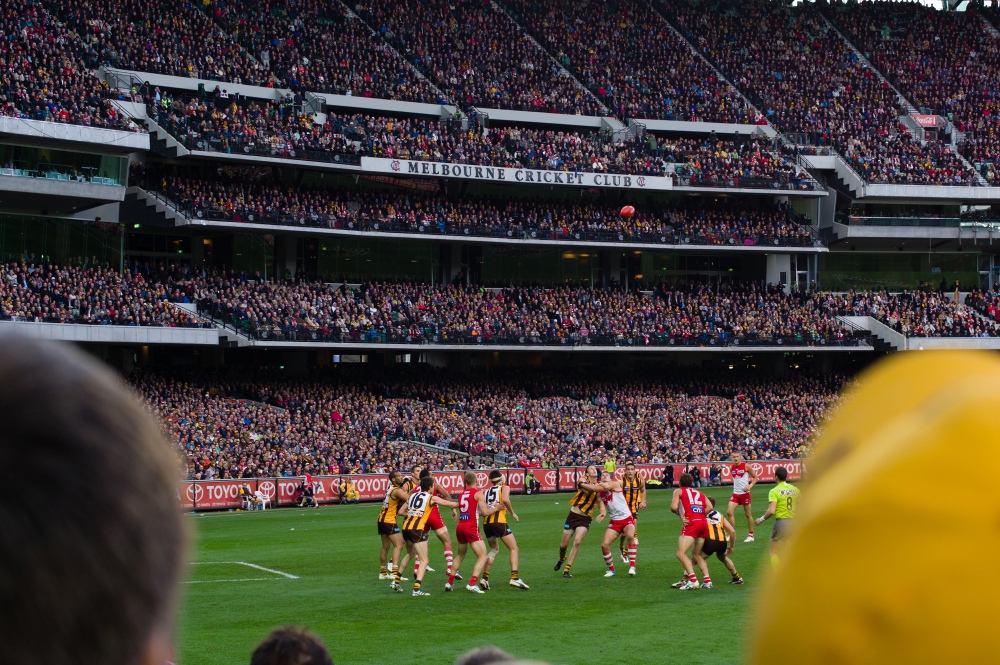
Last month I had the privilege of attending one of the biggest events in Australia—the AFL (Australian Football League) Grand Final. For those of you outside Australia, it’s kind of like the Superbowl of Aussie football (without all the cool ads and wardrobe malfunctions…).

Anyway, I was a guest (with my wife “V”) at the event of Virgin Australia and it was quite the experience.

The game is held at the MCG (a stadium in Melbourne) and was attended by 99,683 people.

During the Nathional Anthem moments before the game started

I don’t know if you’ve had the experience of being in a crowd close to 100,000 people, but it is a pretty amazing thing to be a part of—especially when so many of them are so passionate about supporting their team to win the season’s ultimate prize.

The game starts

As I sat there in that frenzy of flag-waving, face-painted, screaming fans it was easy to look at the crowd and almost see them as a single unit. Within an hour or so, the stadium had been transformed from a quiet, empty place into one that was teaming with life.

Buddy Franklin (one of the biggest AFL stars) takes a ‘Mark’ early in the game

However that crowd was actually made up of almost 100,000 small parts. Each person in attendance had entered through the turnstiles that day, one by one, having made their way to the stadium from around the city (and in some cases, from around the country). Each one came in their own unique way, with their own unique story, and their own unique expectations of what was about to unfold at the Grand Final.

Within seconds to go the game was tied up – this vital contest led to a goal that sealed the match for the Sydney Swans.

Each one also had their own experience of the day. For some, those expectations were exceeded as their team won. Others left the stadium dejected after seeing their team lose.

This was highlighted to me at the end of the game, particularly when I watched these two fans celebrating with such emotion.

Tension – it went down to the wire

Emotion – the win is in sight

Jubilation – the final siren sounds and pandaemonium breaks lose around us

It strikes me that all this is true for the “crowds” that read our blogs, too.

I was chatting with one blogger at the ProBlogger Training Event in Melbourne recently and they told me that they’d just passed the 100,000-visitors-in-a-month milestone. As we chatted, I told her that that’s enough people to fill the MCG, and an amazing thing!

However it is good to also remember when we celebrate these milestones that the crowds (whether they be 100, 10,000, 100,000, or 10,000,000) are actually more than just a number—they’re made up of individual readers.

The total “unique visitors” stat that many of us use to measure the success of our blogs is actually made up of real people who arrive, one by one, on our blogs.

  • They have unique journeys, and arrive from different places.
  • They each arrives at a different part of our blog (many on our archives).
  • They each come with their own set of needs that they’re looking to fulfil.
  • Each person has been shaped by their own stories and experiences.
  • Each has his or her own expectations of what the experience of your blog will be like.

Keeping this in mind as you blog is so important—it should shape the way that you write, the way that you build community, the way that you find new readers, and even the way that you monetize.

Don’t get too wrapped up in the overall number of visitors (big or small). Instead, focus upon the individuals who make up the crowd, and you’ll create something that not only grows, but really impacts the lives of those who read it.

A big thanks to Virgin Australia for the experience of going to the Grand Final – an experience of a lifetime.

Originally at: Blog Tips at ProBlogger
DMS_468x60_LS_banner4.gif

Blogging Isn’t a Numbers Game: It’s a People Game