


“How I Tweaked my WordPress Blog to Rank Better in the Search Engines” plus 1 more |  |

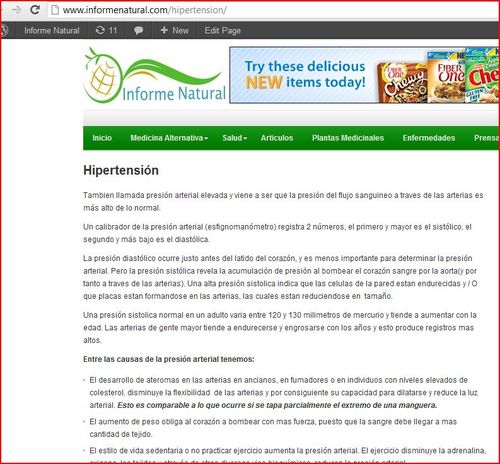
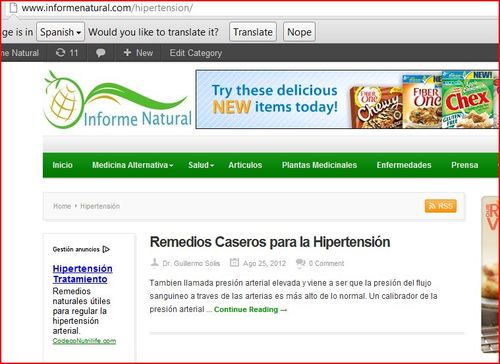
| How I Tweaked my WordPress Blog to Rank Better in the Search Engines Posted: 18 Sep 2012 01:06 PM PDT This guest post is by Jonathan of NutraSol Natural Center. As bloggers and website owners, improving our websites is an absolute must, and search engine optimization is important if we want to get more traffic through search engines. I have been familiar with SEO since before I started my first blog on professional business strategies. I came across it during the research stage when I was trying to learn everything I could about creating a website. Once I was exposed, I was instantly hooked. What interested me the most about SEO was the challenge of competing with other sites to appear on the first page of Google for my target keywords. It is almost as if SEO gives us esoteric super-powers that are only fully understood by a small community of internet marketers. After learning enough to get me started, I created some blogs and conducted experiments that allowed me to learn a few tricks on my own. Using WordPress features for SEONot long ago, I started a Spanish blog on home remedies and alternative medicine. It's not in English—my apologies—but that's the blog I first implemented this technique on. When I started it, I had envisioned it as a reference site where people could go and find information on natural remedies, so I decided to have the articles on static pages rather than blog posts. I also decided to have the names of the ailments in the page URL. For example, for hypertension, I had the URL http://www.informenatural.com/hipertension/ on a static WordPress page. The logic behind this approach was to have a reference page for all the ailments I covered, and people could go there just to get this information. It was going well and traffic was growing little by little, but suddenly, a light bulb switched on in my head. I decided to turn my static-page reference site into an online magazine instead, and to feature articles that would encourage social activity where people would be allowed to leave comments. Effectively I wanted to move from a static informational website to a blog. The problem was that in order for me to do this, I had to turn all the pages I had into posts. Turning pages into posts without losing linksThe site was already two years old and I had backlinks around the web that I didn't want to lose. But I also knew that I couldn't have the old pages and the new posts existing together because that would create duplicate content issues for my site with the search engines. Not only that, but all of the pages were in Google's index and some were ranking in the first page of search results for some of my target keywords. Now, you may be thinking, "Why didn't you just give the posts the same URL as the pages?" or "Why didn't you just use a 301 redirect?” The reason is because I was going to turn all the articles I had into posts, and I didn't want one post to have a permalink with a specific single keyword term such as Hypertension. I also preferred to have more pages indexed by the search engines anyway. So, I decided to take a different approach. I decided to turn the single keyword terms into categories so that I could keep the same URL structures and can keep all the inbound links my blog had acquired over the years. I also decided to do this because the single keyword term in the URL could then be used to direct users to other articles that have to do with that term. For example, www.informenatural.com/hipertension would no longer lead to one article on a static page; it would be the page to go to to find all the posts related to that subject. Here's how I did itBy default, WordPress category pages contain the word "category" in their URLs. For example, informenatural.com/hipertension would be converted to informenatural.com/category/hipertension. In order for things to go as planned, I needed to remove the word “category” from the category permalinks. I did this by using a WordPress plugin called WP No Category Base. Doing this allowed me to maintain the URL and preserve the permalinks in the format I originally had them in. After doing this, I copied the content from the page to the post, with my keyword terms in the titles and permalinks of the posts. Then, I deleted the pages. This allowed me to maintain my links and transform my static-page site into a blog. I conducted keyword research, found the long-tail terms that I wanted to rank for, and included them in the permalinks of my posts. After that, I signed into my Google Webmaster Tools account, and used the Fetch As Google tool to submit the new URLs. Grow your traffic with WordPressThese changes have allowed my traffic to increase tremendously and I predict it will continue to grow with time. WordPress gives us the flexibility to do many things with our blogs and it allows us to stay organized while we're at it. If you find that a post is not ranking well enough for a keyword, you can always do some keyword research to find a better phrase with more searches and change your URL to include that term. Experiment with your blogs, using WordPress features to your advantage, and you can help your blog grow like never before. Do you use WordPress features to help your search rank? Share your favorite tip with us in the comments. Jonathan is the founder of NutraSol Natural Center and LocalRoamer.Com. He has a Bachelor’s Degree in Business Administration and he is currently enrolled in courses to get a degree in Nutrition. Jonathan has designed 2 blogs on natural remedies to educate his customers for his store at Informe Natural and Earth Doctor. Originally at: Blog Tips at ProBlogger How I Tweaked my WordPress Blog to Rank Better in the Search Engines     |
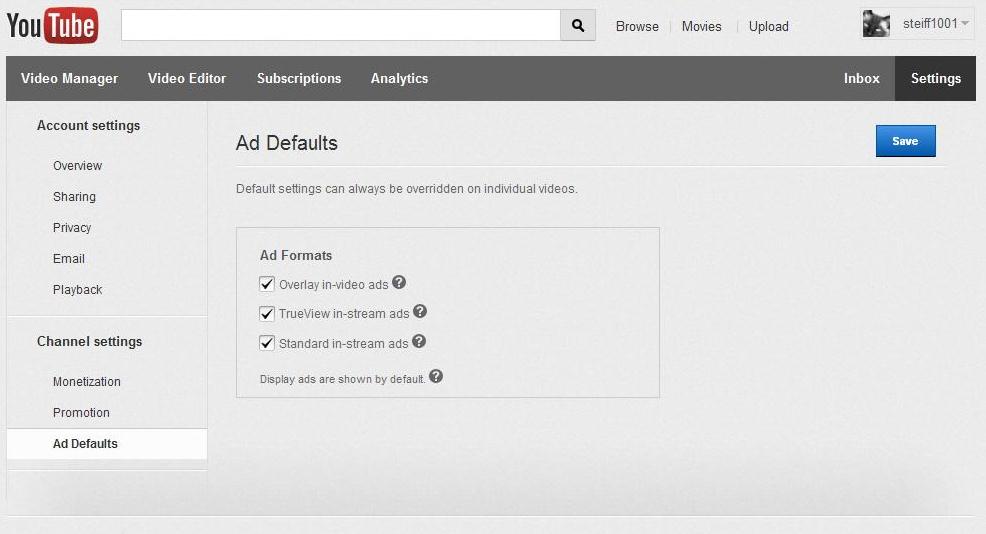
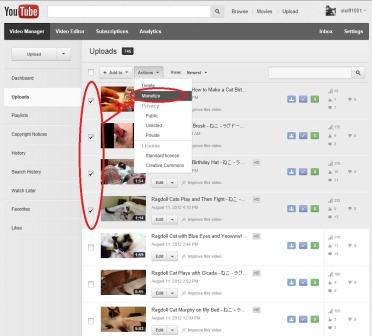
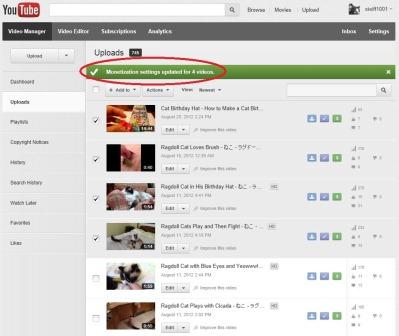
| How to Mass Monetize Your YouTube Channel Posted: 18 Sep 2012 07:07 AM PDT This guest post is by Jenny Dean of Floppycats. One of the joys of the Internet is the opportunity to become friends with a complete stranger on the other side of the world. Michael Strange and I had two things in common when we first met: we both owned Ragdoll cats, and we both had YouTube channels. After an exchange of comments on each other's videos, I discovered Michael knew a lot more than I did about being found on YouTube and being paid for being found. I was making approximately $3 per month from my YouTube channel and Michael showed me the potential to make 3500% more than that! If you have a YouTube channel, you may not know that you can make money from your videos (if they are yours) through revenue sharing. You used to have to be a YouTube Partner in order to be able to monetize your videos, however, this is no longer the case. All you need now is a YouTube account that has videos on it and an Adsense account. If you sign into your account and go to Video Manager, more than likely you’ll see a notification letting you know that you can now monetize your videos. So if you don’t have an Adsense account set up, you will want to do that. Then, you’ll need to follow these steps to connect the two, and monetize your videos. Setting ad preferencesLog into YouTube, go to Video Manager, and you'll see a dollar sign that may or may not be colored in. For videos that are not yet monetized, the dollar sign is not colored in. For videos that are monetized, the dollar sign is colored green. Those already monetized, of course, can be skipped. The ones with a dollar sign button on a white background are the ones to select and update. As of April 2012, YouTube made mass monetizing your videos easier than before. If you go to Settings, you'll see they've added a new entry in the left-hand column, near Monetization, called Ad Defaults. Select all the ones you want (partner accounts will have three options; non-partners just two) and click on Save. You can apply these preferences to all new uploads, but they won't affect movies you’ve already monetized. Mass monetize your moviesTo mass monetize your videos, select ten movies at a time and use the Action drop-down to bulk monetize them using the default preferences you have just saved. If you go through all your movies you can update the ad types in bulk like this. If you’ve already set those preferences for a movie, then setting it again will make no difference. If a video only had some of the new preferences set, they will be updated to the full range of options when you have selected them and applied your new preferences. To mass monetize after you have set your monetization preferences, go to Video Manager, where you’ll see your uploaded videos listed. Select the videos that you want to monetize, as below, then go to Actions and select Monetize. A new window will pop up to confirm your preferences. Click on the blue Monetize button, and voila! All of those videos are monetized to your preferences! You’ll also see a confirmation that the videos previously selected have been monetized. If you have not monetized your videos, if you have only monetized some of them, or even if you just don't remember, I encourage you to go into your YouTube account and check everything out. Update your preferences and more likely than not, in a few weeks time you will see your YouTube revenues climb. Thanks to Michael’s advice, I have had fantastic results from this tip, which has even given me a little debt relief! What are some of the monetizing tips that work for you on YouTube? Share them with us in the comments. Jenny Dean is the Editor over at Business Blog Writers, online SEO content writers. She also has some of her own blogs, Floppycats, Antioxidant-fruits and Guide to Couponing. Business Blog Writers offers a YouTube enhancement service. Originally at: Blog Tips at ProBlogger How to Mass Monetize Your YouTube Channel     |




| You are subscribed to email updates from @ProBlogger To stop receiving these emails, you may unsubscribe now. | Email delivery powered by Google |
| Google Inc., 20 West Kinzie, Chicago IL USA 60610 | |


